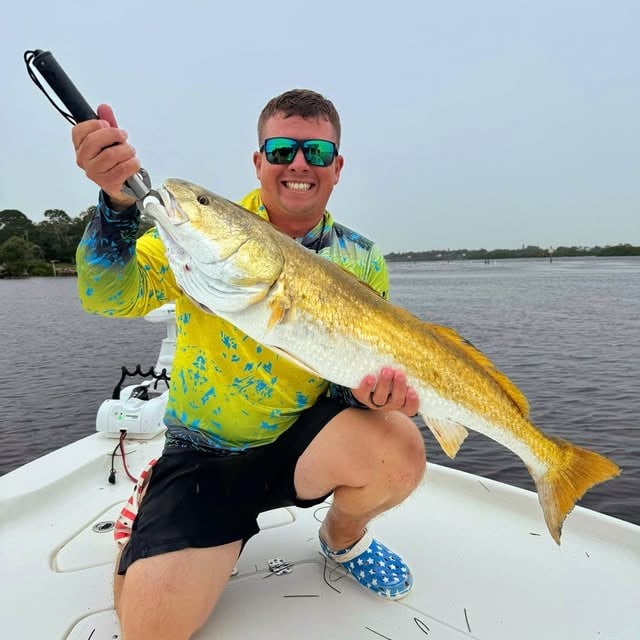
A local captain’s guide to Port Richey redfish fishing in the fall: finding, hooking and releasing redfish on the mangrove shorelines, oyster bars and grass flats of Port Richey, Florida, from the first cool mornings of September through the cold fronts of December.
If you could pick only one season to chase redfish in Port Richey, fall would be the easy choice. The summer heat finally breaks, the water starts to cool, schools of mullet pack the shorelines, and redfish start feeding like they know winter is coming. For anglers visiting Pasco County from up north, fall is also when the weather turns comfortable, the boat traffic thins out, and a morning on the water feels like Florida at its best.
Port Richey sits right where the Pithlachascotee River, known locally as the Cotee River, meets the Gulf. Mangrove islands, oyster bars, creek mouths, limestone rock and miles of shallow grass flats stretch north and south of town. That mix of habitat is exactly what redfish want in the fall, and it is a big reason Port Richey is one of the most underrated redfish areas on Florida’s Gulf Coast.
This guide covers everything you need to know about Port Richey redfish fishing in the fall: why the bite gets so good, where the fish hold, how tides and cold fronts change things, the best baits, lures and tackle, the current Florida regulations for this area, and how to release your catch so it lives to fight again. Whether you fish on your own or book a trip with Reel Coast Adventures, this is the playbook Capt. Zach uses on the water every fall.
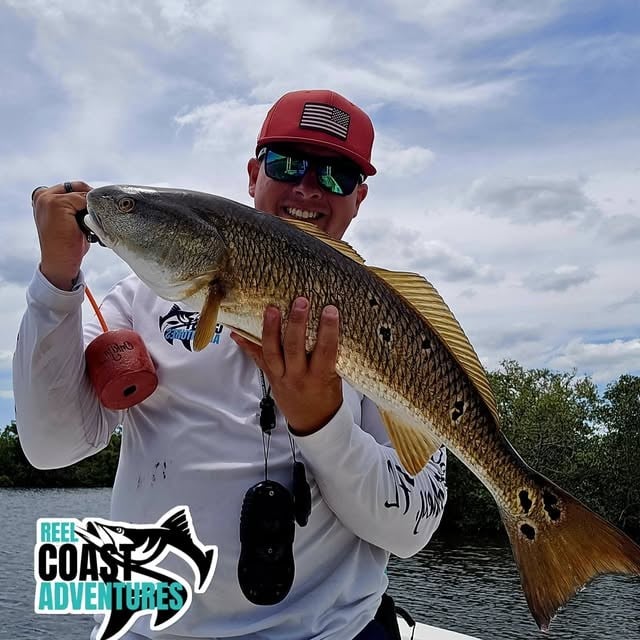
Quick Guide: Port Richey Redfish Fishing in the Fall
- What the redfish are doing
- Feeding early and late; schools forming along shorelines
- Best approach
- Early-morning high tides on mangroves and oyster bars
- What the redfish are doing
- Prime time; reds follow big mullet schools onto the flats
- Best approach
- Find the mullet, fish the incoming tide
- What the redfish are doing
- Feeding hard between cold fronts; tides start getting lower
- Best approach
- Creek mouths, potholes and rocky edges
- What the redfish are doing
- Reds settle into creeks, bayous and deeper holes after fronts
- Best approach
- Slow down; fish warmer afternoons and deeper water
Water temperatures are long-term monthly averages for the Port Richey and Anclote area and can swing several degrees with the weather. Regulations are summarized from the Florida Fish and Wildlife Conservation Commission (FWC); always check myfwc.com before you fish.
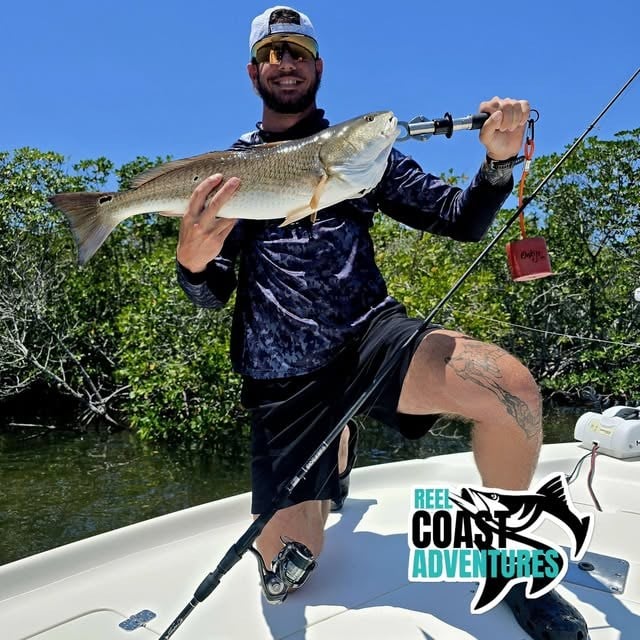
Why Fall Is Prime Time for Port Richey Redfish
Redfish live in Port Richey’s waters year-round, but fall brings together everything that makes them easy to find and willing to eat. As the water drops out of the summer 80s, redfish become more active through the whole day instead of only at first light. They are building up energy for the leaner winter months, so they feed aggressively and will eat just about anything that looks natural.
At the same time, the bait is everywhere. Big schools of mullet flood the shorelines and flats, crabs and shrimp are plentiful around the oyster bars, and baitfish crowd the mouths of creeks and bayous. Where the food goes, the redfish follow.
Fall also brings some of the most comfortable fishing weather of the year. Cooler mornings, lower humidity and calmer days between fronts make long hours on the water a lot more enjoyable, especially for families and first-time anglers.
💡 Captain Zach’s Local Tip
In the fall, don’t just look for redfish. Look for mullet. A big school of mullet pushing water along a mangrove shoreline or across a flat is one of the best signs that redfish are nearby. Reds travel with the mullet and pick off the crabs, shrimp and small fish the school stirs up.
Understanding Fall Redfish Behavior
Knowing what redfish are doing in the fall, and why, makes it much easier to figure out where they will be on any given day.
They Travel With the Mullet
Fall is mullet season along the Florida coast. Huge schools gather along shorelines and on the flats, and redfish use them for food and for cover. The mullet stir up the bottom as they feed, flushing crabs, shrimp and baitfish that redfish are happy to grab. The big school also helps hide redfish from dolphins and ospreys. When you see “nervous water” or a mud cloud moving across a flat, there is a good chance redfish are mixed in.
They School Up
In the fall, redfish often gather in schools ranging from a handful of fish to dozens. A school can be a little spooky in clear, shallow water, but once you find one, it is possible to catch several fish from the same group. Watch for wakes, tails and copper-colored backs in the shallows, especially on calm mornings.
The Big Ones Show Up
Late summer and fall are spawning season for adult redfish on the Gulf Coast, and that is when oversized “bull” reds gather around passes, bay mouths and nearshore structure. Despite the nickname, most of these giant fish are actually females. In the Port Richey area, most of the redfish you catch on the flats will be slot-sized and just over, but fall is the season when an oversized fish is most likely to surprise you. Florida law requires every redfish over 27 inches to be released, which protects these big breeding fish.
🔎 Did You Know?
According to the FWC, redfish usually don’t spawn until they grow larger than 27 inches. That is why the slot limit tops out at 27 inches: it lets anglers keep an eating-sized fish while protecting the big females that produce the next generation.
Where to Find Fall Redfish Around Port Richey
Port Richey’s coastline is a maze of mangrove islands, tidal creeks, oyster bars and shallow flats. North of town, Werner-Boyce Salt Springs State Park protects about four miles of undeveloped coastline with salt marsh, tidal creeks, seagrass beds and grass flats. To the south, the Cotee River, Miller’s Bayou and the residential canals of the Gulf Harbors area all drain onto the flats.
Rather than one “secret spot,” fall redfish success in Port Richey comes from understanding the types of places redfish use and matching them to the tide. Here are the four kinds of spots Capt. Zach checks most often in the fall.
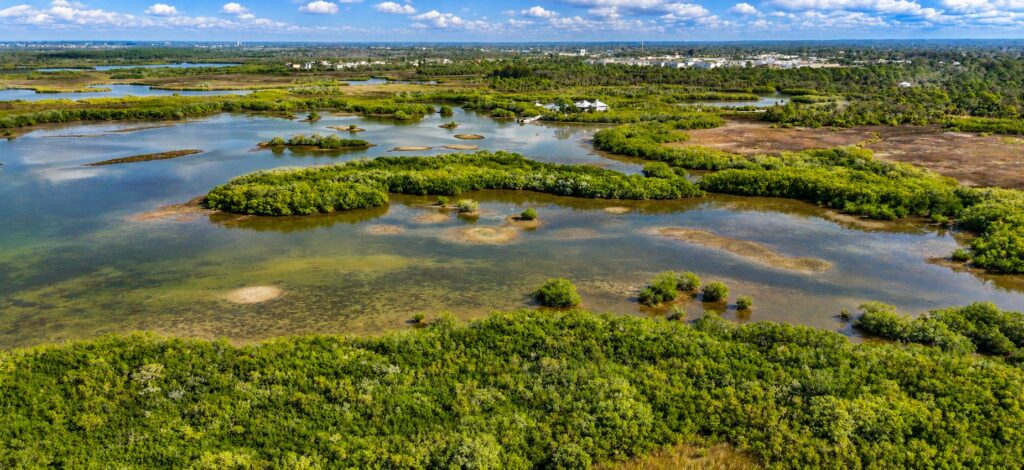
Mangrove Shorelines
On higher water, redfish push right up under the mangrove roots to hunt crabs, shrimp and small fish. Look for points, cuts and pockets in the shoreline, and pay attention to stretches where mullet are working.
Oyster Bars
Oyster bars hold crabs, shrimp and baitfish, which makes them redfish magnets. Fish the edges and the deeper water just off the bar as the tide rises, then work the down-current side as the water moves.
Creek and Bayou Mouths
Where creeks, bayous and the Cotee River drain onto the flats, moving water funnels bait to waiting redfish. These spots get even better later in the fall, when falling tides pull bait out of the backcountry.
Grass Flats, Potholes and Rock
Scattered grass, sand potholes and limestone rock outcroppings on the flats give redfish places to ambush food. On lower water, reds often drop into potholes and slightly deeper edges where they feel safe.
💡 Captain Zach’s Local Tip
Fall winds often come out of the north and east. On breezy days, look for shorelines and creek mouths that are protected from the wind. Calmer water is easier to read, easier to cast, and the redfish tend to feed more comfortably there. Port Richey’s mangrove islands give you lots of options to tuck in out of the wind.
Reading the Tides and Weather in the Fall
Port Richey’s flats are shallow, so a few inches of water can completely change where the redfish are. Tide, wind and cold fronts matter as much as location in the fall.
The Incoming Tide Is Your Friend
For most of the fall, a rising tide is one of the best times to target redfish. As water floods onto the flats and up into the mangroves, reds move in to feed on crabs and shrimp that were out of reach at low tide. The last couple of hours of incoming water and the start of the outgoing are often prime windows. Any time the water is moving, though, you have a shot.
Cold Fronts and North Winds
As fall turns toward winter, cold fronts start rolling through every week or so. The cold itself doesn’t bother redfish much. The bigger factor is the strong north wind behind a front, which pushes water off the flats and creates extra-low tides. When that happens, redfish leave the skinny water and gather in potholes, cuts, channels, creek mouths and deeper holes nearby. That can actually make them easier to find, because the fish are concentrated in fewer places.
Fishing the Days Around a Front
Right before a front arrives, fish often feed heavily as the pressure drops. The first day or two after a strong front, with bright blue skies and a stiff north wind, can be tougher. Fish slower, focus on deeper water and creeks, and try the afternoons when the sun has warmed the shallows. A few days after the front, as the wind lays down and temperatures rebound, the bite usually comes right back.
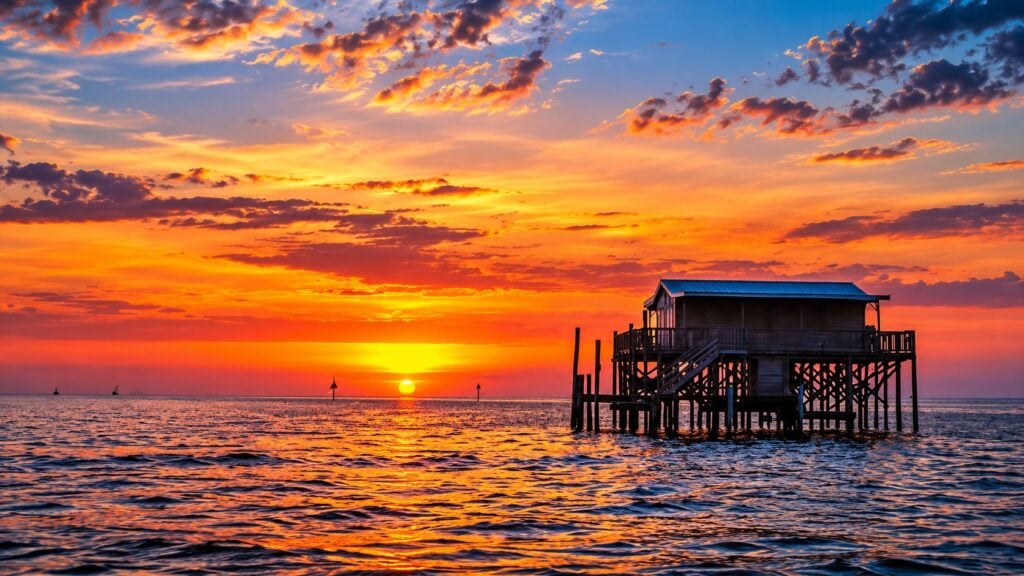
The historic stilt houses off Port Richey. Calm fall evenings like this one often come between cold fronts.
Want to Catch Your First Port Richey Redfish?
Fish the mangroves, oyster bars and flats with a licensed local captain. Live bait and your fishing license are covered on every Reel Coast Adventures inshore charter.
Book Your Fall Redfish Trip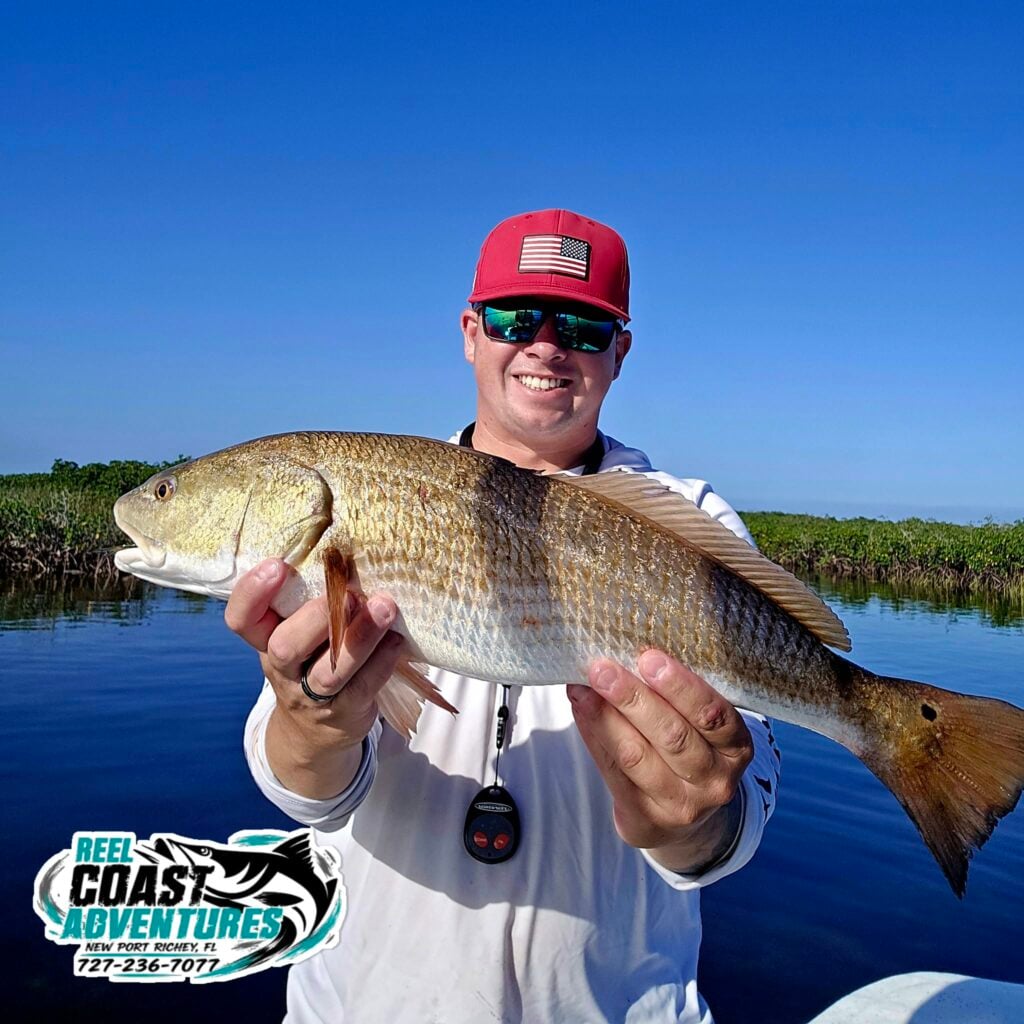
Best Baits for Fall Redfish in Port Richey
Redfish are not picky eaters in the fall, but presenting a lively, natural bait in the right spot makes a huge difference. These are the baits that consistently produce around Port Richey this time of year.
- 🦐 Live shrimp: The most universal inshore bait. Free-lined or under a popping cork near oyster bars and mangroves, shrimp will catch redfish almost anywhere.
- 🐠 Pinfish: Tough, lively and easy to find on the grass flats. A small pinfish is a great choice when you want to target bigger redfish and avoid bait-stealers.
- ✨ Whitebait (scaled sardines): When they’re available, a few scaled sardines thrown near the mangroves can get a school of redfish fired up.
- 🟢 Greenbacks (threadfin herring): Another excellent live bait that redfish have a hard time ignoring.
- 🔪 Cut bait: Chunks of fresh mullet or ladyfish on the bottom put out a scent trail. Cut bait shines on lower tides and in deeper holes after cold fronts.
- 🦀 Crabs: Redfish feed heavily on crabs around the oyster bars, and a small crab or a half of a larger one can tempt a big red.
Best Lures for Fall Redfish
If you prefer artificial lures, fall is a great time to throw them. Redfish are aggressive and spread out, which lets you cover water and find active fish quickly.
- Soft plastic paddle tails and jerk baits: Rigged weedless on a light jig head or weighted hook, soft plastics land quietly and can be worked over grass, oysters and rock without hanging up. In clear, shallow water, that soft landing helps keep from spooking fish.
- Gold spoons: A classic redfish lure. A weedless gold spoon flashes like a fleeing baitfish and covers a lot of water on the flats.
- Topwater plugs: On calm, low-light mornings, a walk-the-dog topwater worked over a flat or along a shoreline can draw explosive strikes.
- Popping corks: A popping cork over a shrimp or a soft plastic makes a commotion that sounds like feeding fish and draws redfish in from a distance.
💡 Captain Zach’s Local Tip
Match the color to the water. In clear water on a sunny day, natural colors like white, silver and light green work well. In darker or stained water near the river and creek mouths, try darker colors or something with gold flash that shows up better.
Tackle and Rigging for Fall Redfish
You don’t need heavy gear to catch Port Richey redfish, but you do need tackle that can steer a strong fish away from oyster bars and mangrove roots. Here is a simple, proven setup.
| Gear | Recommendation | Why It Works |
|---|---|---|
| Rod | 7 ft medium or medium-light spinning rod | Long casts with light baits, enough backbone to turn a fish |
| Reel | 2500 to 3000 size spinning reel | Smooth drag and plenty of line capacity for a big red |
| Main line | 10 to 15 lb braid | Thin, strong and sensitive; casts a long way |
| Leader | 20 to 30 lb fluorocarbon, 2 to 3 ft | Holds up against oysters and rough redfish mouths |
| Hook | Non-offset circle hook sized to the bait | Hooks fish in the corner of the mouth for safer release |
| Weight | None to a small split shot or light jig head | Keeps the bait natural in shallow water |
For cut bait in deeper holes, a simple knocker rig or a short leader with a small egg sinker works well. For live bait on the flats, free-lining or using a popping cork is usually all you need.
Port Richey Redfish Fishing Month by Month
🌅 September: The Transition Begins
September still feels like summer in Port Richey, and the water is warm. The best redfish action usually comes early in the morning and late in the day, especially on higher tides when fish can get up into the mangroves. Bait is plentiful, and schools of redfish start forming along shorelines and oyster bars.
🔥 October: The Peak of the Fall Bite
October is when everything comes together. Average water temperatures in the Port Richey area are around 79°F, mullet schools are thick, and redfish are feeding hard throughout the day. This is the month to look for schools pushing across flats, tailing fish on the incoming tide, and the best chance at a big over-slot redfish.
🍂 November: Feeding Between Fronts
By November, average water temperatures drop to around 71°F and cold fronts become more regular. The days between fronts can offer some of the best fishing of the year, with calm water and hungry fish. As fronts push water off the flats, start checking creek mouths, potholes, rocky edges and the deeper water near the Cotee River and the bayous.
❄️ December: Slowing Down in Deeper Water
December averages in the mid-60s, and the extra-low tides after fronts push redfish into creeks, bayous, channels and holes. Slow your presentation, fish the warmer afternoons when the sun has heated the shallows, and don’t be afraid to fish cut bait on the bottom. Some of the clearest, calmest days of the year happen in December, which can make for great sight fishing on the higher tides.
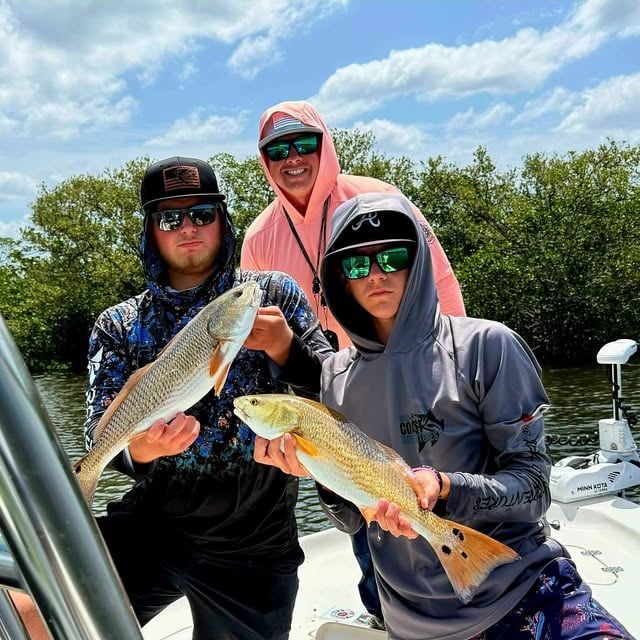
Doubles Happen
When a fall school of redfish turns on, it’s not unusual to have two rods bent at the same time.
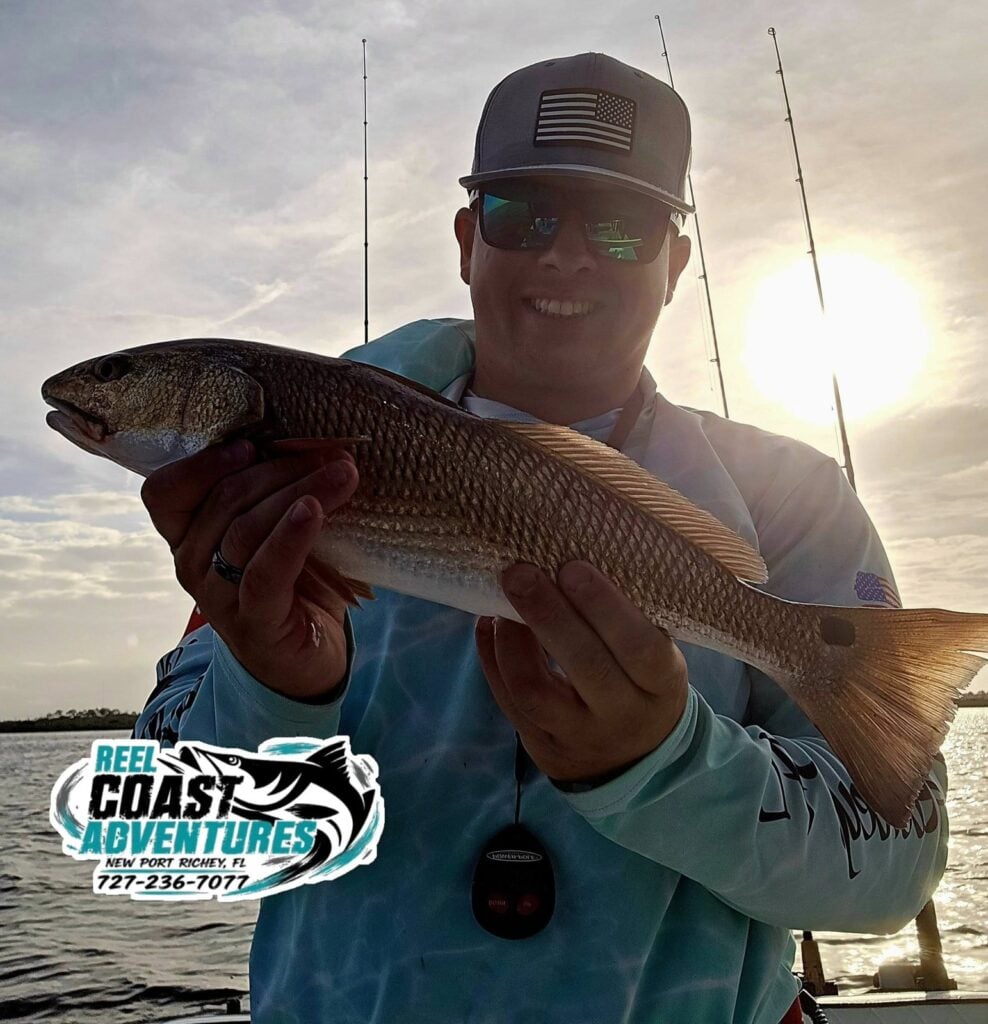
Golden-Hour Reds
Early mornings and late afternoons are prime feeding windows, especially in September.
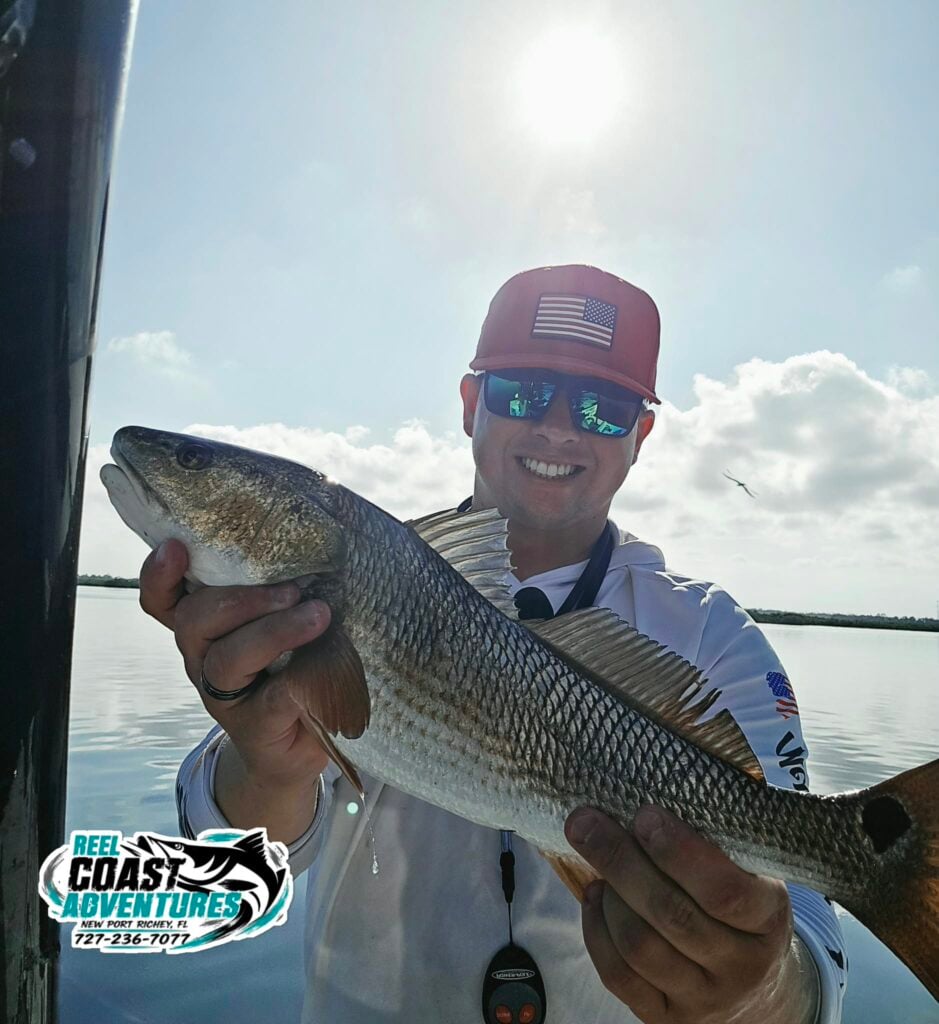
Calm Days Between Fronts
Light winds and clear water make it easier to spot redfish pushing wakes across the flats.
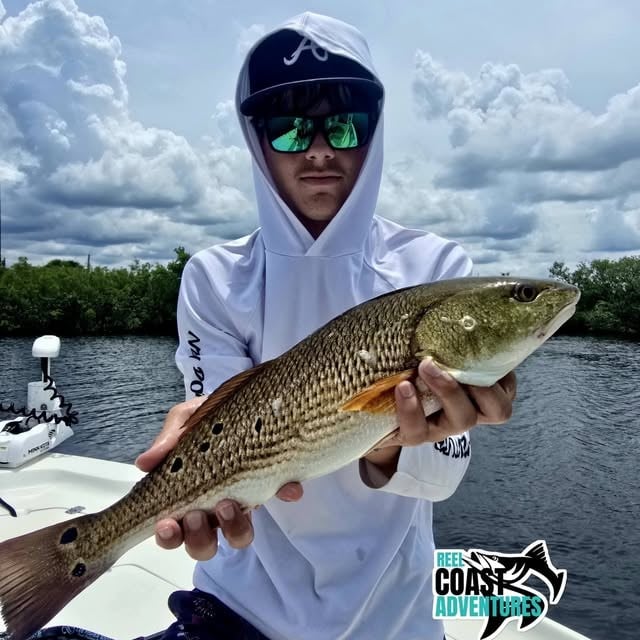
Great for Young Anglers
Redfish pull hard but are forgiving to fight, which makes them a perfect target for kids and first-timers.
Florida Redfish Regulations for Port Richey
| Rule (Big Bend Region) | Current Regulation |
|---|---|
| Season | Open year-round |
| Slot limit | 18 to 27 inches total length |
| Daily bag limit | 1 redfish per person per day |
| Vessel limit | 4 redfish per vessel |
| Legal gear | Hook and line, and cast nets |
| Not allowed | Spearing, gigging, bowfishing and snatch hooking; using multiple hooks with live or dead natural bait |
| Condition | Fish must stay in whole condition until landed ashore |
| Transport limit | 4 redfish per person when traveling by vehicle away from the fishing site |
Source: Florida Fish and Wildlife Conservation Commission, Red Drum (Redfish) regulations. FWC reviews redfish rules regularly, so confirm the current regulations before every trip.
Florida manages redfish by region. Port Richey falls in the Big Bend Redfish Management Region, which runs from near Alligator Point in the Panhandle south to Fred Howard Park near the Pasco and Pinellas county line, and includes the Anclote River and its tributaries. South of Fred Howard Park, in Pinellas County, the next region has a lower vessel limit of two redfish, so it’s important to know which side of the line you’re fishing.
⚓ Good to Know for Charter Guests
On a licensed for-hire trip, the captain and crew can’t keep a bag limit of their own, so the fish you keep come from the guests’ limits. On a Reel Coast Adventures charter, Capt. Zach’s for-hire license covers your saltwater fishing license, so you don’t need to buy one for the trip. Fall is also open season for snook harvest in the Big Bend region through November 30, which makes it a great time to try for an inshore slam of snook, redfish and trout.
♻️ Catch and Release Done Right
Many of the redfish caught in the fall will be released, either because they are over the slot or because the angler simply wants to let them go. A healthy release is just as important as a good hookset. These best practices come straight from FWC guidance:
- Use non-offset, non-stainless circle hooks with natural bait to help hook fish in the mouth instead of the gut.
- Fight the fish quickly with tackle that is heavy enough, so it isn’t exhausted at the boat.
- Handle the fish as little as possible and only with wet hands to protect its slime coat.
- Use a dehooking tool, and if a fish is gut-hooked, cut the line close to the hook instead of digging for it.
- Support the fish’s body horizontally for photos, and avoid holding big redfish vertically by the jaw.
- Have the camera ready before you land the fish so it spends as little time out of the water as possible.
- Release the fish head-first and move it forward through the water to push water over its gills until it swims off.
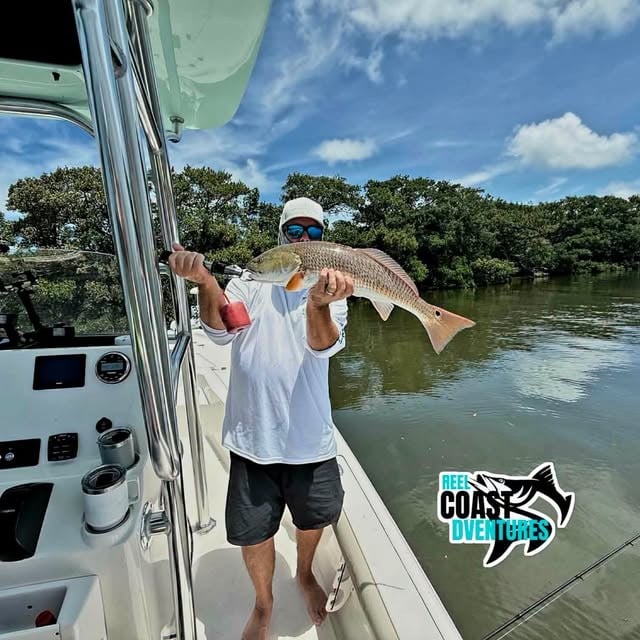
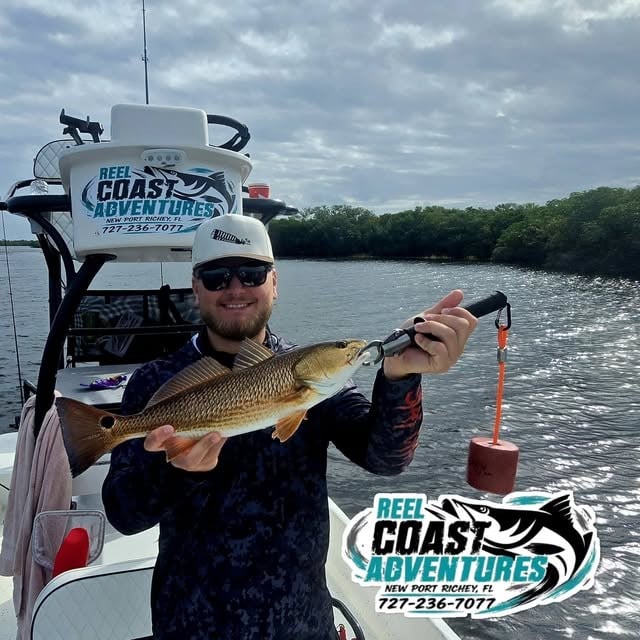
Fishing Port Richey Redfish With Reel Coast Adventures
If you want to skip the guesswork, Reel Coast Adventures runs private inshore fishing charters out of Port Richey. Most trips launch from the Nick’s Park boat ramp, just minutes from the mangrove shorelines, oyster bars and grass flats covered in this guide.
You’ll fish from a 19-foot Florida Fisher skiff with a tower, built to get into the shallow water where fall redfish feed. Live bait is loaded before you board, and Capt. Zach’s for-hire license covers your fishing license. Trips are private, with room for up to four guests, and they’re a great fit for families, couples and first-timers.
Want to go after more than redfish? The Inshore Slam Challenge is a 6-hour trip built around catching a snook, a redfish and a spotted seatrout in the same day, and fall is one of the best times of year to pull it off.
🗺️ Plan Your Fall Fishing Trip
Frequently Asked Questions About Fall Redfish Fishing in Port Richey
When is the best time for Port Richey redfish fishing?
Fall, from September through November, is one of the best times of the year. October is often the peak, with cooling water, big mullet schools and aggressive feeding. Redfish can be caught year-round, though, and December can be excellent around creeks and deeper holes after cold fronts.
What is the redfish limit in Port Richey, Florida?
Port Richey is in the FWC’s Big Bend Redfish Management Region. The slot limit is 18 to 27 inches, with a limit of one redfish per person per day and four per vessel. The season is open year-round. Always confirm current rules with the FWC before fishing.
What is the best bait for fall redfish?
Live shrimp is the most dependable all-around bait. Pinfish, scaled sardines, threadfin herring, crabs and cut mullet or ladyfish all work well, too. Cut bait is especially effective in deeper holes on low tides after cold fronts.
What tide is best for redfish fishing?
On Port Richey’s shallow flats, a rising tide is often best because it lets redfish move up onto the flats and into the mangroves to feed. Moving water in either direction is better than slack water. During extra-low tides in late fall, focus on potholes, creek mouths and deeper edges.
Do I need a fishing license on a charter?
Not on a Reel Coast Adventures trip. Capt. Zach’s Florida for-hire license covers the saltwater fishing license for guests on the charter. If you fish on your own, you’ll need a Florida saltwater fishing license unless you qualify for an exemption.
Can I keep a bull redfish?
No. Any redfish over 27 inches must be released in Florida. These big fish are the breeding stock of the fishery, so handle them carefully, keep them in the water as much as possible, and release them head-first.
Book Your Port Richey Redfish Fishing Trip This Fall
Fish Port Richey’s mangroves, oyster bars and flats with a licensed, veteran-owned local charter. Reel Coast Adventures — Real Waters. Real Adventures.
Book Your Trip
About the Author
Captain Zach Bandl — Reel Coast Adventures
Captain Zach is a U.S. Coast Guard-licensed captain and the owner of Reel Coast Adventures, a veteran-owned business based in the New Port Richey area.
With more than 30 years of experience fishing and exploring the waters of Pasco County, Captain Zach shares firsthand knowledge of Florida’s Gulf Coast through fishing charters, island excursions, educational experiences, and original outdoor content.
His goal is to help visitors discover the natural beauty of Florida’s Nature Coast while creating memorable experiences on the water.
Park hours, fees, closures, ferry service, and wildlife restrictions can change at any time. Information in this guide was checked in November 2026; always confirm current details with the official park or attraction before your visit.
Leave a Reply